
From Prototype to Operational Autonomy: AeroRozum at Finland's Largest Defence Hackathon
AeroRozum validated an edge-native drone autonomy stack combining real-time perception, onboard reasoning, and field-ready mission decision support.
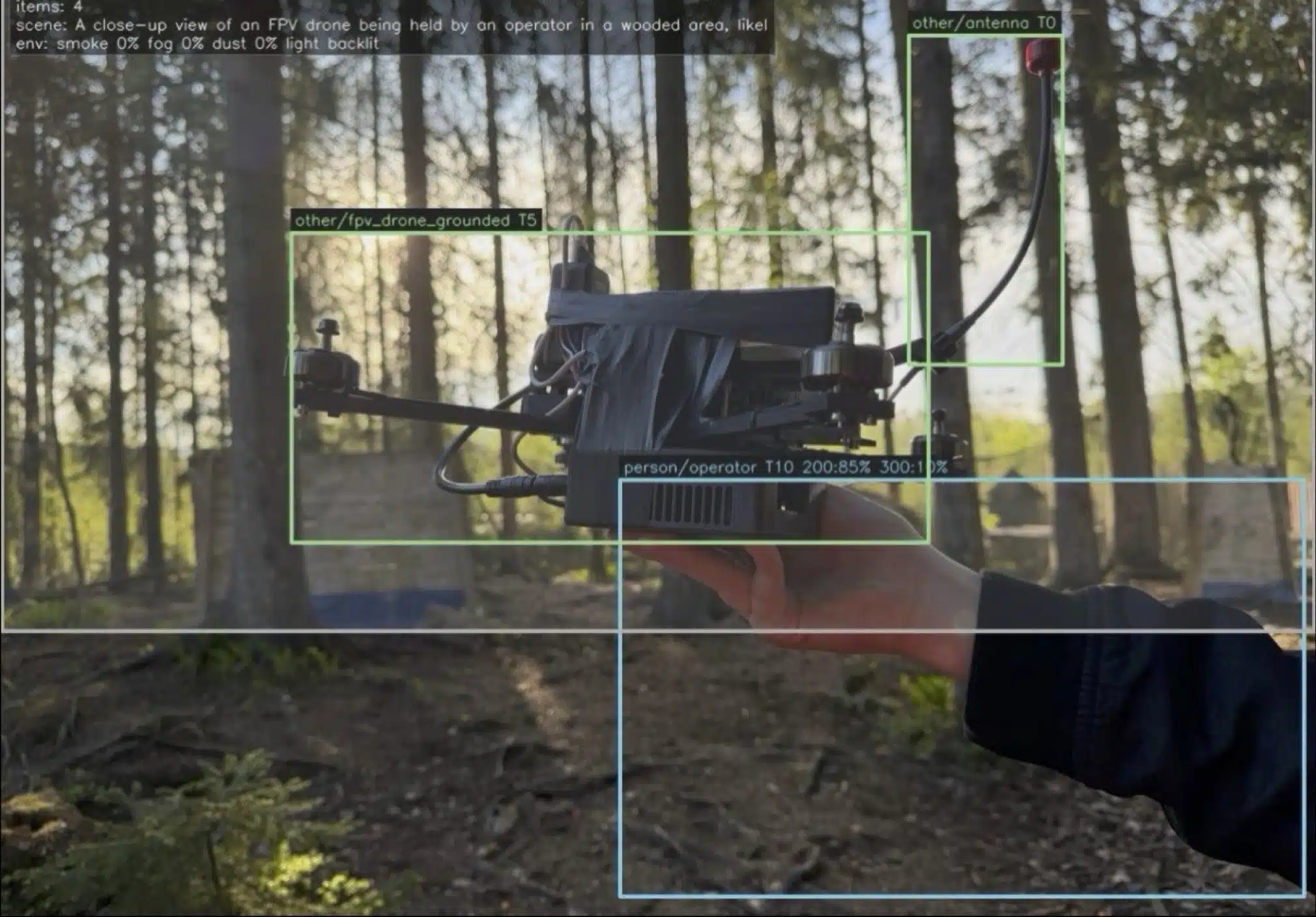
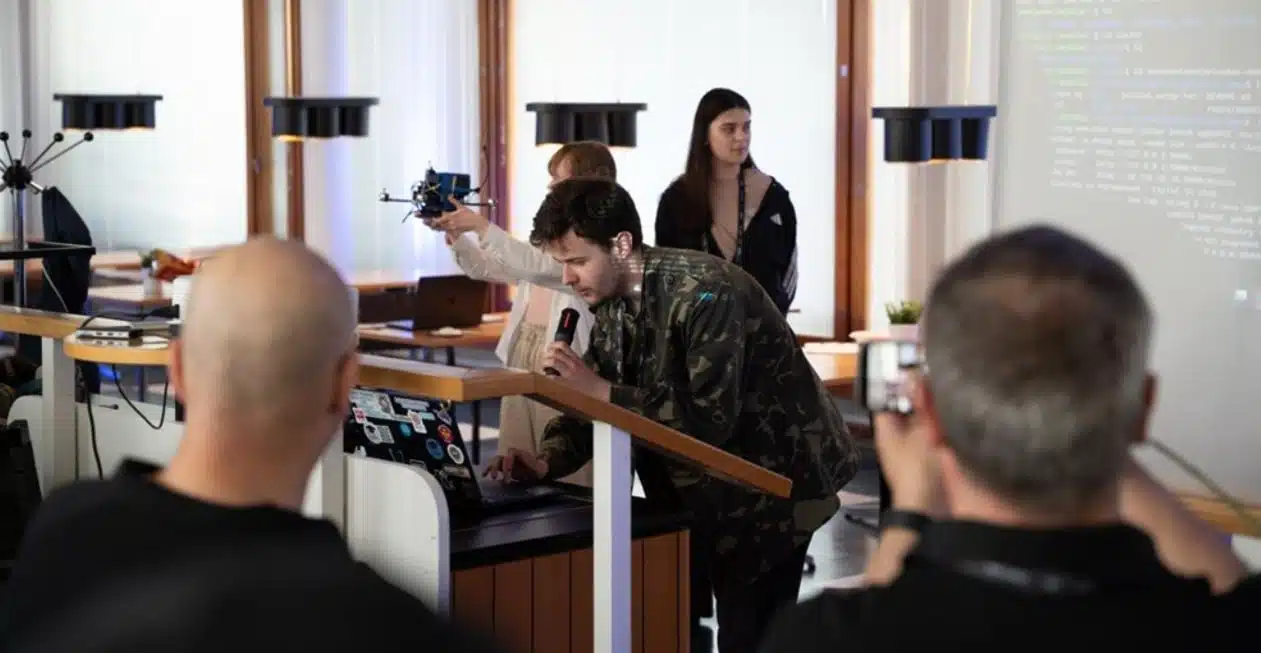
In May 2026, the AeroRozum team participated in the Aalto Defence x Junction Hackathon, one of the largest defence innovation events in Northern Europe. Within 48 hours, the team designed, implemented, and demonstrated an autonomous perception and reasoning system for drones, earning a place among the Top 5 teams selected to pitch for acceleration.
For AeroRozum, however, the result was only one milestone. The objective was never simply to build a demonstration. It was to validate architectural decisions that continue to shape the platform today.

Beyond object detection
Modern autonomous systems require far more than recognizing objects in a camera feed. Real-world operations demand continuous perception, contextual understanding, and explainable decision-making under uncertainty.
During the event, AeroRozum developed an edge-native AI pipeline capable of transforming raw sensor data into actionable mission intelligence.
The system combines lightweight computer vision models with an onboard reasoning layer. Real-time perception detects and classifies relevant objects, estimates poses, and tracks targets, while a higher-level planning system continuously evaluates mission context, environmental conditions, payload status, and previous observations before recommending or executing the next action.
Rather than relying on cloud infrastructure, the entire pipeline was designed to operate directly on embedded hardware, enabling autonomous operation in communication-constrained environments.
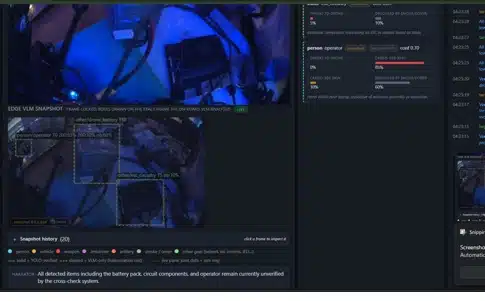
An architecture designed for the field
The prototype demonstrated several core capabilities that continue to evolve within AeroRozum's platform.
An edge computer vision system performed low-latency object detection and target tracking on NVIDIA Jetson hardware while remaining optimized for deployment on resource-constrained UAV platforms.
On top of perception, an onboard Vision-Language-Action planning layer maintained mission awareness instead of reacting frame by frame. By combining live observations with historical context, the planner could adapt behavior dynamically as the operational situation evolved.
Separating deterministic flight control from AI reasoning was a deliberate architectural decision. Safety-critical control loops remained predictable and low-latency, while higher-level AI continuously interpreted the operational picture and proposed tactical decisions without interrupting flight execution.
This layered approach creates a system that is both autonomous and explainable, an increasingly important requirement for next-generation defence systems.
Rapid validation under real constraints
Hackathons compress months of engineering decisions into days.
Instead of treating the event as an isolated competition, AeroRozum used it as an opportunity to rapidly validate assumptions about hardware integration, onboard inference, autonomous planning, and operator interaction.
The resulting prototype demonstrated that complex AI workloads can execute directly on edge hardware while maintaining the responsiveness required for autonomous drone operations.
Equally valuable was the opportunity to receive feedback from defence experts, engineers, military advisors, and industry partners throughout the event. Those discussions continue to influence the platform's roadmap.
Building the future of autonomous defence systems
The Top 5 finish confirmed that AeroRozum's approach addresses challenges extending well beyond a hackathon scenario.
Today, development continues toward increasingly capable autonomous systems that combine multi-sensor perception, onboard reasoning, distributed autonomy, and AI-assisted decision support.
The long-term vision remains unchanged: to build autonomous systems that help operators understand complex environments faster, make better decisions, and safely execute missions in situations where every second matters.