Advancing AeroRozum Through European Defence Innovation
AeroRozum advanced multi-sensor battle damage assessment and autonomous multi-UAV exploration capabilities through rapid European defence innovation programs.

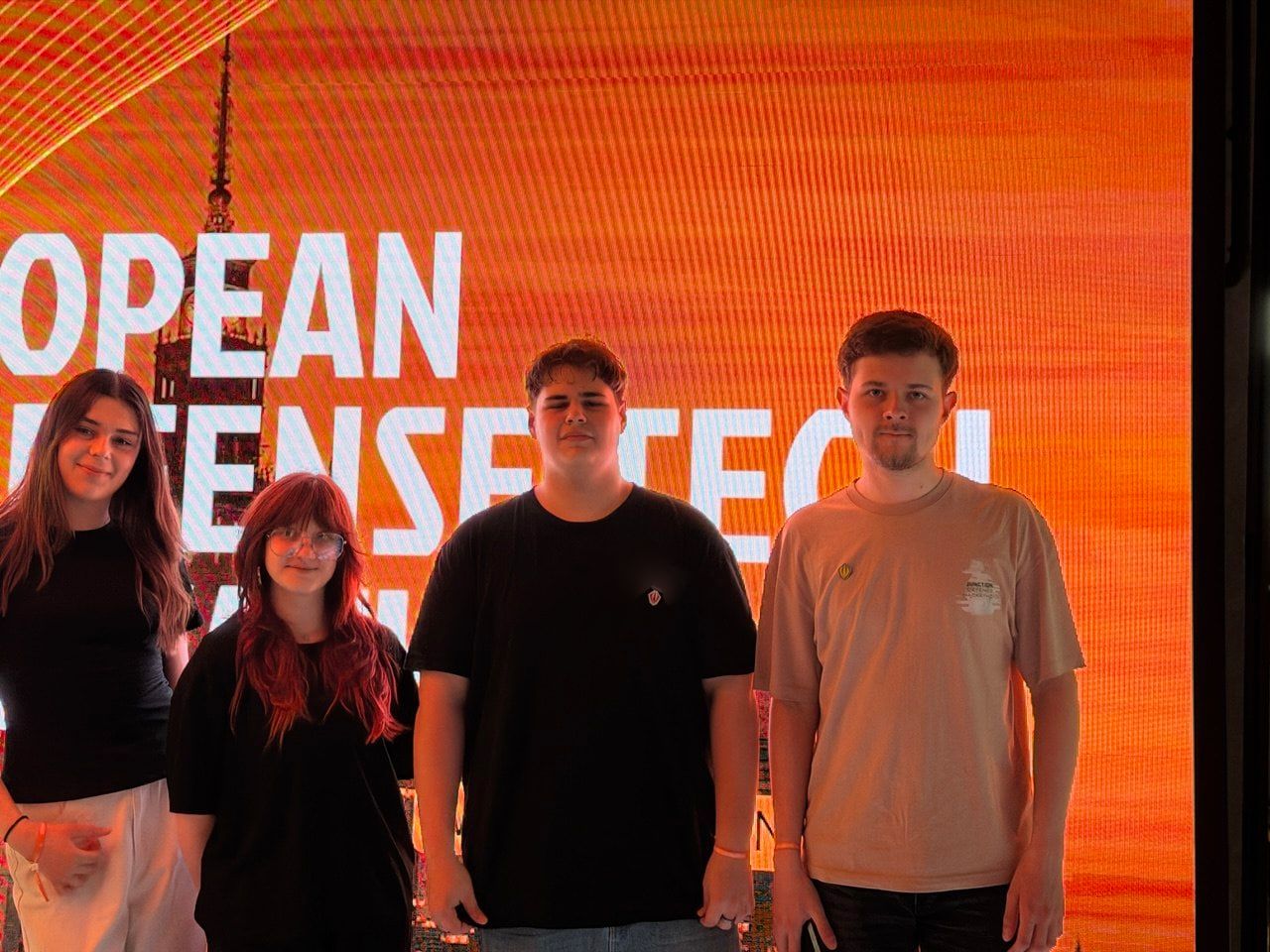
Over the past month, AeroRozum used two European defence innovation programs as rapid development environments to advance capabilities that matter directly for field operations: multi-sensor battle damage assessment and autonomous multi-UAV exploration.
The focus was not simply participation. The work produced validated prototypes, live test data, and clearer product direction for AI-driven systems that reduce operator workload and improve situational awareness in complex environments.
Multi-sensor battle damage assessment
At the European Defence Tech Hack in Warsaw, the team addressed a challenge originating directly from the Ukrainian battlefield: while precision strike capabilities continue to improve, understanding what actually happened after impact remains a major operational bottleneck.
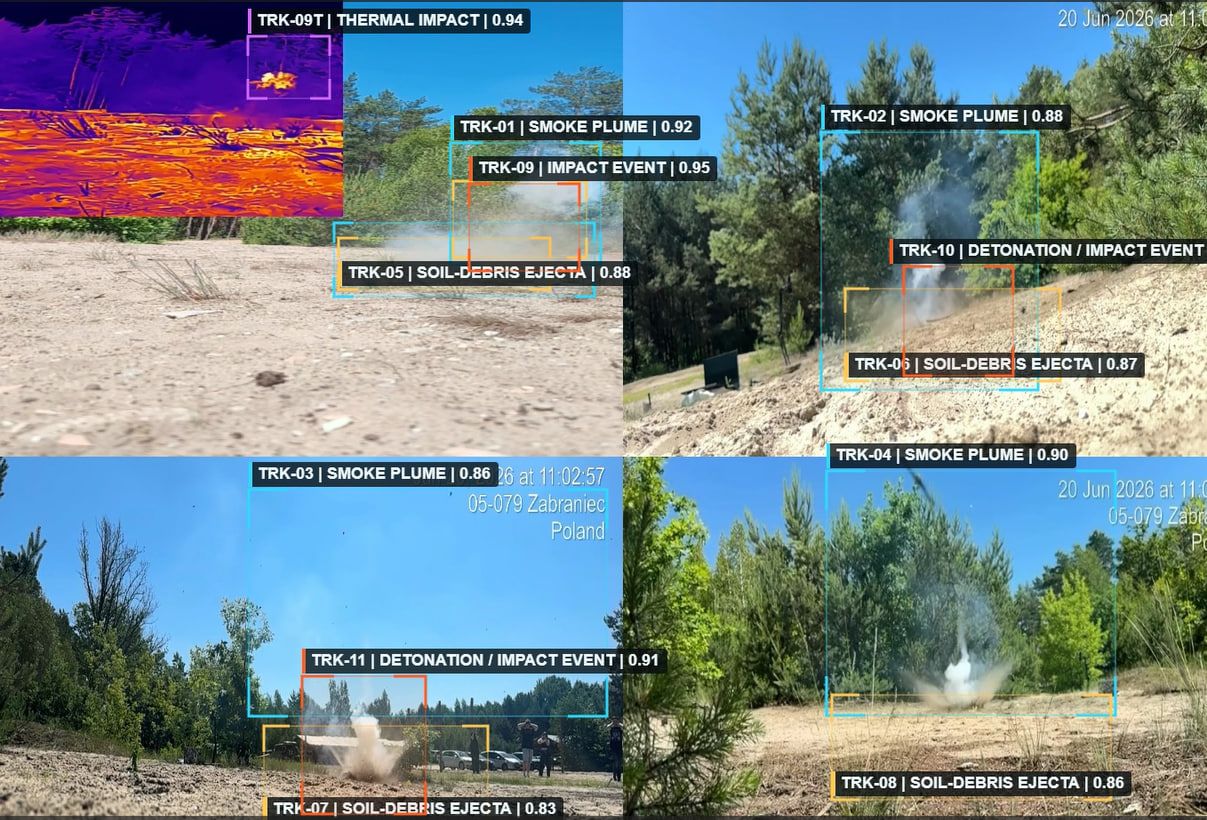
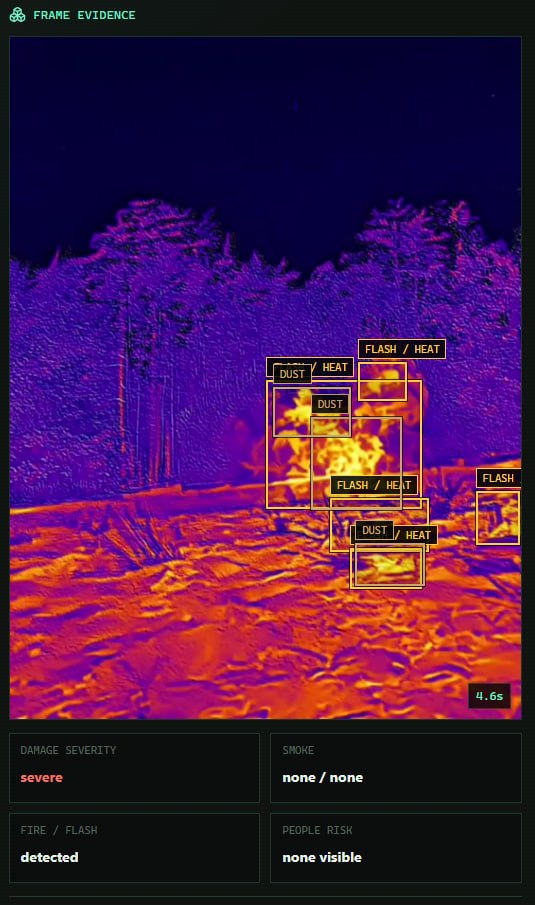
To tackle this, AeroRozum developed an AI-powered Battle Damage Assessment solution that aggregates and fuses fragmented real-time information from multiple sources, including RGB and thermal cameras, satellite imagery, local security cameras, and open-source data. Instead of relying on isolated observations, the system generates a unified operational picture, enabling faster and more reliable post-strike assessment.
Within the program timeframe, the team built a functional MVP and validated it during live field testing using controlled explosive scenarios. Real RGB and thermal data were collected and processed through AeroRozum's multi-sensor AI fusion pipeline, providing valuable input for continued development and future deployment planning.
Autonomous multi-UAV exploration
Shortly afterward, AeroRozum continued development at the European Defence Tech Hack in Munich, focusing on autonomous multi-UAV coordination and exploration.
The work centered on developing a portal-aware frontier exploration algorithm designed to enable multiple UAVs to efficiently explore unknown environments while minimizing redundant coverage and unnecessary flight distance. By combining intelligent frontier selection with overlap-aware surveillance, the approach improves operational efficiency and situational awareness during reconnaissance missions.
This capability is especially relevant for missions where teams need to map unknown or partially observed spaces quickly, preserve endurance, and maintain useful coverage without micromanaging every aircraft.
Why it matters operationally
Both development tracks support the same operational goal: giving teams better information while reducing the amount of manual interpretation, redundant flight time, and direct human exposure required in the field.
From multi-sensor intelligence fusion for post-strike assessment to autonomous UAV coordination for reconnaissance, these developments represent another step toward practical, field-ready systems that improve decision-making and provide actionable situational awareness where it matters most.